You don’t need a gym membership or a room full of expensive equipment to build an effective exercise routine. For many people, home workouts are simply a practical way to fit movement around work, family and everyday life.
The key, however, is not doing the hardest workout you can find online. A good home routine should match your current fitness level, include different types of activity and be realistic enough to maintain.
What Makes a Home Workout Effective?
An effective workout is one you can perform safely, consistently and progressively.
Your routine should reflect what you are trying to achieve. Someone who wants to improve general fitness may benefit from a mixture of brisk walking, aerobic exercise and strength work. Someone focusing on building strength will need more resistance-based exercise. Read Also: Building Muscle on a Ketogenic Diet: What the Evidence Says
It is also important not to judge a workout solely by how tired you feel afterwards. Feeling exhausted doesn’t necessarily mean a session was more effective.
For most people, consistency matters more than constantly chasing more intense workouts.
How Much Exercise Do You Need?
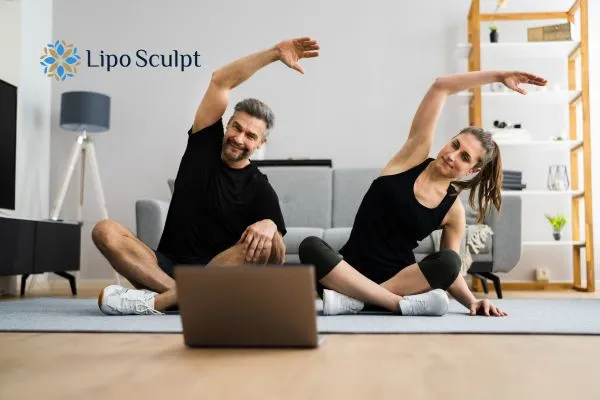
The UK Chief Medical Officers’ current guidance advises adults to aim for at least 150 minutes of moderate-intensity physical activity each week, or 75 minutes of vigorous-intensity activity, or a combination of the two. Adults should also undertake muscle-strengthening activities on at least two days each week. [1]
You do not have to achieve this entirely through structured workouts. Walking, cycling, active travel and other forms of movement can contribute too.
If you currently do very little exercise, starting with smaller amounts is perfectly reasonable. The latest guidance emphasises that some activity is better than none, with benefits increasing as activity increases. [1]
Build Your Home Workout Around Three Things
1. Cardio
Cardiovascular exercise raises your breathing and heart rate. At home, this might include dancing, marching, step exercises, skipping or an online aerobic workout.
You do not need to exercise at maximum intensity. Moderate activity should make you breathe faster and feel warmer while still allowing you to talk.
2. Strength
Strength work is particularly important because the UK guidelines recommend muscle-strengthening activity at least twice a week. [1]
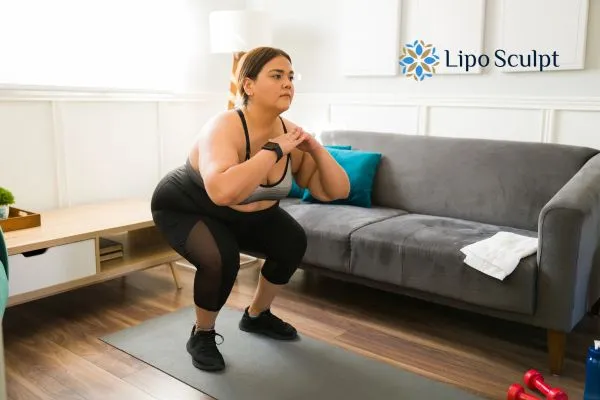
Exercises such as squats, lunges, press-ups and selected core exercises can form part of a balanced physical activity routine. Resistance bands, dumbbells or other weights can provide additional challenge.
Start at a level that lets you control the movement, rather than choosing a resistance that compromises your technique.
3. Mobility and flexibility
Mobility exercises can complement strength and cardiovascular activities. Gentle movements can help you practise moving through the ranges of movement involved in your chosen activities.
You do not need a separate, lengthy stretching session every day. You can incorporate a few minutes of appropriate mobility work into a wider routine.
A Simple Home Workout Structure
If you are unsure how to organise a session, keep it straightforward.
Start with a few gentle movements to gradually prepare your body for exercise. NHS guidance recommends warming up before more vigorous activity, with examples including marching and knee lifts. [2]
Then choose a small number of exercises appropriate to your ability. For example, a beginner might combine a lower-body movement, an upper-body movement, a core exercise and a period of moderate cardio.
Finish by gradually reducing the intensity rather than stopping abruptly.
The exact exercises, repetitions and resistance should depend on your fitness level and any physical limitations you have.
How to Progress Without Overdoing It
Progress doesn’t always mean exercising longer or choosing a harder workout.
You might gradually increase repetitions, resistance, control, range of movement or the amount of time spent exercising. You could also improve the consistency of your routine.
Avoid making several major changes at once. If a workout suddenly becomes much longer or more intense, your body may not have had enough time to adapt. Check Out: Natural Diet Options for Body Transformation: What Really Helps?
Pain should not simply be treated as something you have to “push through”. If an exercise causes pain or makes you feel unwell, stop and reassess it.

Equipment: What Do You Actually Need?
Very little.
A safe amount of floor space and comfortable clothing may be all you need for many exercises. A mat can make floor-based movements more comfortable, while resistance bands or dumbbells can provide additional options as your strength develops.
You don’t need to buy a large collection of equipment right away.
If you are new to exercise, learn how to perform basic movements correctly before adding heavier resistance or more complicated exercises.
Staying Safe When Exercising at Home
Check your workout area before starting. Remove trip hazards, make sure equipment is stable and leave enough space to move safely.
Your exercise should also suit your current health and fitness. NHS guidance recommends speaking to a healthcare professional if you have a health condition, injury, symptoms, recent health event or concerns about whether an exercise is suitable. This is also particularly important during pregnancy or after giving birth. [2]
Stop exercising if you experience pain or become unwell. If you are concerned about symptoms or they do not settle, seek appropriate medical advice. [2]
Remember that an online workout cannot assess your individual health, movement pattern or injury history. If you are unsure about a particular exercise, professional guidance may be more appropriate than simply following a generic video.

When Exercise Isn’t the Whole Picture
Exercise can be an important part of looking after your health, fitness and strength, but it does not need to become a way of judging your body.
Some people are also interested in aesthetic treatments because they have specific concerns about body shape, skin laxity, or localised areas of fat that have not changed as they hoped through lifestyle changes.
These treatments should not be presented as replacements for exercise, healthy eating or medical care. They address different cosmetic concerns and suitability varies between individuals.
Before considering a non-surgical aesthetic treatment, make sure you understand what it is intended to address, its potential limitations, possible risks and side effects, and whether it is appropriate for your individual circumstances.
Summary
A suitable home workout is one that matches your current ability, includes a balanced mix of physical activity, allows you to progress gradually and is realistic enough to maintain as part of your routine.
Start where you are, build consistency and adjust your routine as your fitness develops. If you have a medical condition, injury or symptoms that could affect exercise, get appropriate professional advice before pushing ahead.
And if your interest is specifically cosmetic rather than fitness-related, keep that distinction clear. Exercise and aesthetic treatments serve very different purposes, so a proper consultation should focus on what you want to change and whether the treatment is suitable.
Frequently Asked Questions
Q: Can I get a good workout St Albans without going to the gym?
Yes. Bodyweight exercises, resistance bands, weights and aerobic activities can all be used at home. The most appropriate routine depends on your fitness level and goals.
Q: How often should I exercise St Albans at home?
UK physical activity guidance recommends that adults aim to be active throughout the week, with a general target of around 150 minutes of moderate-intensity activity each week, alongside muscle-strengthening activities on two or more days. However, the amount and type of activity that is appropriate can vary depending on individual circumstances, fitness levels and abilities.
Q: Do I need weights for strength training?
No. Bodyweight exercises can provide resistance, although bands, dumbbells and other equipment can give you more options as you progress.
Q: Can exercise reduce stubborn areas of fat?
Exercise can support overall health, fitness and body composition, but it does not determine where changes in body fat occur. Fat distribution varies between individuals, so changes in a particular area cannot be guaranteed.
Q: Should beginners do HIIT workouts?
HIIT involves periods of higher-intensity exercise, so it may not be the right starting point for everyone. If you are new to exercise, consider beginning at a level that feels appropriate for your current fitness and gradually building up the intensity over time. If you are unsure whether higher-intensity exercise is suitable for you, consider speaking to a suitably qualified healthcare or exercise professional.
Q: Should I exercise if I have an injury?
Not without considering the injury and the type of exercise involved. If you are unsure whether an exercise is appropriate, NHS guidance recommends getting professional advice. [2]
Q: Can aesthetic treatments St Albans replace exercise?
No. They serve different purposes. Exercise can support your overall health, fitness and muscle strength, while aesthetic treatments are designed to address specific cosmetic concerns. One should not be promoted as an alternative to the other.
References & Further Reading
[1] Department of Health and Social Care / UK Chief Medical Officers — UK Chief Medical Officers’ Physical Activity Guidelines, 2026. GOV.UK — UK Chief Medical Officers’ physical activity guidelines
[2] NHS — How to warm up before exercising, reviewed 24 June 2026.
Supports the advice about warming up, exercise suitability, seeking professional advice where appropriate and stopping if pain or illness occurs.
NHS — How to warm up before exercising
[3] NHS — Physical activity guidelines for adults aged 19 to 64.
Supports the practical explanation of adult activity and strength-training recommendations.
NHS — Physical activity guidelines for adults aged 19 to 64
For more information, please call us on 03300101799.