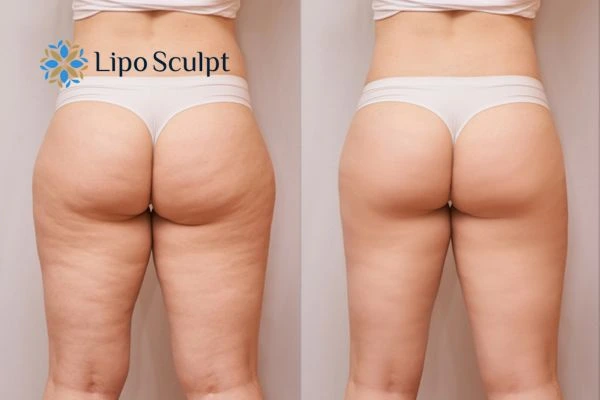
Cellulite is extremely common, yet it is often misunderstood. It can appear on the thighs, buttocks, hips and other areas of the body, and it can affect people of different ages, weights and fitness levels.
Importantly, cellulite is not simply a sign of excess body fat. It is linked to the way fat beneath the skin interacts with connective tissue and the structure of the skin. Genetics, hormones, ageing and changes in body composition can all influence how noticeable it becomes. [1]
If you are considering treatment, understanding why cellulite develops helps because there is no single cause — and no universal solution.
What Is Cellulite?
Cellulite describes the familiar dimpled, uneven appearance that can develop on the skin’s surface.
Under the skin, the body naturally contains a layer of fat known as subcutaneous fat. This fat is separated into sections by fibrous connective tissue. Where the fat and connective tissue interact with the skin above, the surface can develop dips and uneven areas. [1][2]
This is why cellulite should not simply be thought of as “excess fat”. Someone can have a healthy body weight, exercise regularly and still have noticeable cellulite. See Here: Lost the Weight but Not the Loose Skin? What You Should Know
Cellulite is also different from cellulitis, a bacterial skin infection that requires medical treatment. If an area of skin becomes painful, hot, swollen or increasingly red, particularly if you feel unwell or develop a fever, seek medical advice rather than assuming it is cosmetic cellulite.
5 Common Factors That Influence Cellulite
1. Genetics and Skin Structure
Genetics is one of the important factors associated with cellulite.
Your genes can influence skin thickness, connective tissue structure, fat distribution and other characteristics that affect how visible dimpling is. This helps explain why cellulite can run in families and why two people with similar body shapes can have very different-looking skin.
The arrangement of connective tissue may also contribute to why cellulite is considerably more common in women. [1][2]
So there is no reason to assume that cellulite means someone has neglected their health or fitness.
2. Hormonal Changes
Hormones are another factor researchers believe may influence cellulite.
The relationship is complex, but hormonal changes can affect fat distribution, skin and connective tissue. This may help explain why some people notice changes in the appearance of cellulite during different stages of life.
Cellulite can look different from person to person and may be influenced by multiple factors. A range of factors can influence the appearance of cellulite, including hormonal, genetic, structural, and lifestyle-related factors. [1]
3. Ageing and Changes in Skin Elasticity
Cellulite can become more noticeable as we get older.
Skin naturally changes with age, including changes to collagen, elasticity and thickness. Changes in the tissues beneath the skin can also alter how surface contours appear.
Changes in skin structure over time may affect how visible existing cellulite appears. [2]
4. Body Composition and Weight Changes
Body weight can be one of several factors that may influence how cellulite appears, although the relationship is not straightforward.
Changes in body weight may influence the appearance of cellulite, although this can vary between individuals. Losing weight does not necessarily mean that cellulite will disappear, as its appearance can also be influenced by factors such as skin structure, connective tissue and individual body composition.[2][3]
That is why cellulite shouldn’t be treated as simply a weight-loss problem.
If someone is considering cosmetic treatment, the more useful question is often: what is actually contributing to the appearance in this particular area?
3. Lifestyle and Muscle Tone
Your lifestyle can influence aspects of your overall body composition and appearance, but cellulite is not simply caused by being inactive or by particular foods.
Regular exercise, including resistance training, can support muscle strength, fitness and healthy body composition. Any effect this may have on the appearance of cellulite will vary from person to person.
A balanced diet and healthy lifestyle are sensible for general wellbeing, but they should not be presented as a guaranteed way to remove cellulite.
Does Having Cellulite Mean You Are Overweight?
No.
Cellulite occurs in people with a wide range of body shapes and body weights. It is also common in people who exercise regularly.
This is an important distinction because marketing that suggests cellulite is simply the result of being overweight can create unrealistic expectations and unnecessary pressure.
Published research describes cellulite as a multifactorial cosmetic concern, not something explained by body weight alone. [1]
Can You Prevent or Get Rid of Cellulite?
No reliable method can guarantee that cellulite will never develop.
Likewise, it is more realistic to talk about reducing or changing the appearance of cellulite than promising permanent removal.
Researchers have studied a wide range of cellulite treatments, including energy-based treatments, massage-based approaches, topical products, and procedures that alter the connective tissue beneath the skin. Evidence is mixed, and results can vary considerably between treatments and individuals. [1][3] Also check: Non-Surgical Options for Diastasis Recti: What You Need to Know About Tone Sculpt
This matters especially when comparing cosmetic treatments. A treatment designed to reduce a pocket of fat is not automatically a cellulite treatment.
The American Academy of Dermatology notes that some treatments may make cellulite less noticeable, but results vary, and some effects may be temporary.
UK advertising guidance also requires appropriate evidence for objective claims about reducing or treating cellulite. [4]
What Should You Know Before Considering Treatment?
A sensible consultation should begin with the appearance you want to address rather than assuming a particular treatment is appropriate.
Useful questions include:
- Is the concern primarily cellulite, localised fat, loose skin or a combination?
- What can the proposed treatment realistically change?
- What evidence supports its use for this particular concern?
- How many sessions may be required?
- What side effects or risks should I understand?
- Is there any downtime?
- How long might any improvement last?
- What happens if the treatment does not produce the expected result?
A reputable provider should also explain when treatment may not be appropriate.
When Should You Seek Medical Advice?
Cellulite itself is generally a cosmetic concern. However, a new or unusual skin change should not automatically be assumed to be cellulite.
Seek medical advice if an area becomes painful, hot, swollen, rapidly changes, develops significant redness or is accompanied by symptoms such as fever or feeling unwell.
A medical assessment is also appropriate if you are unsure whether what you are seeing is cellulite or another skin or soft-tissue problem.
Frequently Asked Questions
Q: Can slim people have cellulite?
Yes. Cellulite is not restricted to people who are overweight. Genetics, connective tissue, skin structure and other factors can influence its appearance. [1]
Q: Does exercise get rid of cellulite?
Exercise cannot guarantee that cellulite will disappear. Regular physical activity can support general health, fitness and muscle strength, but cellulite is a common feature of skin and connective tissue and may not be eliminated through exercise alone.
Q: Does losing weight remove cellulite?
No, not necessarily. Weight loss does not guarantee that cellulite will disappear. The appearance of cellulite can be influenced by a number of individual and structural factors.
Q: Does cellulite get worse with age?
It can become more noticeable as skin structure and elasticity change with age, although experiences vary from person to person.
Q: Is cellulite harmful?
Cellulite itself is generally considered a cosmetic concern rather than a dangerous medical condition. However, painful, hot, swollen or rapidly changing skin should be medically assessed rather than assumed to be cellulite.
Q: Can cellulite be permanently removed?
There is no guarantee that cellulite can be permanently removed. Treatment results can vary between individuals, and any improvement in the appearance of cellulite may not be permanent. [1][3]
Q: Is cellulite the same as body fat?
No. Although cellulite involves the subcutaneous fat layer, its visible appearance also relates to connective tissue and skin structure. That is why reducing body fat doesn’t necessarily eliminate cellulite.
Q: Should I have a consultation before treatment?
Yes, particularly if you are considering a cosmetic procedure. A proper assessment can help determine whether the concern is cellulite and whether the proposed treatment is appropriate for you.
References & Further Reading
[1] Stefanie Luebberding, Nils Krueger & Neil S. Sadick — “Cellulite: an evidence-based review”, American Journal of Clinical Dermatology, 2015. Supports the multifactorial nature of cellulite, prevalence information and discussion of treatment evidence. PubMed — Cellulite: an evidence-based review
[2] DermNet — “Cellulite”. Supports the explanation of cellulite, connective tissue, fat distribution, genetics, hormones, age and body weight. DermNet — Cellulite
[3] American Academy of Dermatology — “Cellulite treatments: What really works?” Supports the discussion of treatment limitations, differences between fat and cellulite and variable/temporary treatment outcomes. American Academy of Dermatology — Cellulite treatments
[4] ASA/CAP — “Weight control: Cellulite”, 25 November 2025. Supports the need for evidence when making objective claims about treating, reducing or removing cellulite in UK advertising.ASA/CAP — Weight control: Cellulite
For more information, please call us on 03300101799.